Best Engine Upgrades That Add Power Without Ruining Reliability
Want more power without turning your dependable vehicle into a repair project? These practical engine upgrades can improve response and performance while protecting everyday reliability.
APG garage guide
What you need to know
Start with maintenance
Before adding performance parts, make sure the engine is healthy. Check for trouble codes, fluid leaks, worn spark plugs, dirty filters, weak ignition components and cooling-system problems. Modifying an unhealthy engine can make existing problems worse.
Upgrades to approach carefully
Large turbochargers, superchargers, aggressive camshafts, nitrous systems and extreme tunes can provide major power, but they also increase heat and mechanical stress. These modifications require careful planning, supporting components and professional installation.
The tradeoffs
Plan the complete cost and effect of every modification before buying parts.
- Fuel requirements may change
- Emissions compliance and factory warranties can be affected
- Additional power can shorten drivetrain life
- Installation costs may exceed the value of small horsepower gains
The APG take
For a dependable street vehicle, begin with maintenance, correct gearing, cooling and a mild professional tune. Add one modification at a time and measure the result. The best upgrade is not always the one with the highest horsepower claim—it is the one that improves the vehicle without making it unreliable.
The advantages
Carefully selected modifications can improve the way a vehicle performs without sacrificing everyday usefulness.
- Better throttle response
- Improved usable torque
- Stronger towing performance
- A more enjoyable driving experience
Reliable upgrades to consider
Choose modifications that support the entire vehicle and match how it is actually used.
- Quality tires and proper gearing — Correct tire size and axle gearing can improve acceleration, towing response and drivability, especially after fitting oversized tires.
- A conservative ECU tune — A professional vehicle-specific tune can improve throttle response, shift behavior and usable torque without the unnecessary stress of an aggressive calibration.
- A high-flow air filter or well-designed intake — Airflow and engine sound may improve, although power gains are usually modest on an otherwise stock engine.
- A properly sized cat-back exhaust — Reducing restriction can help without removing required emissions equipment or sacrificing low-speed performance.
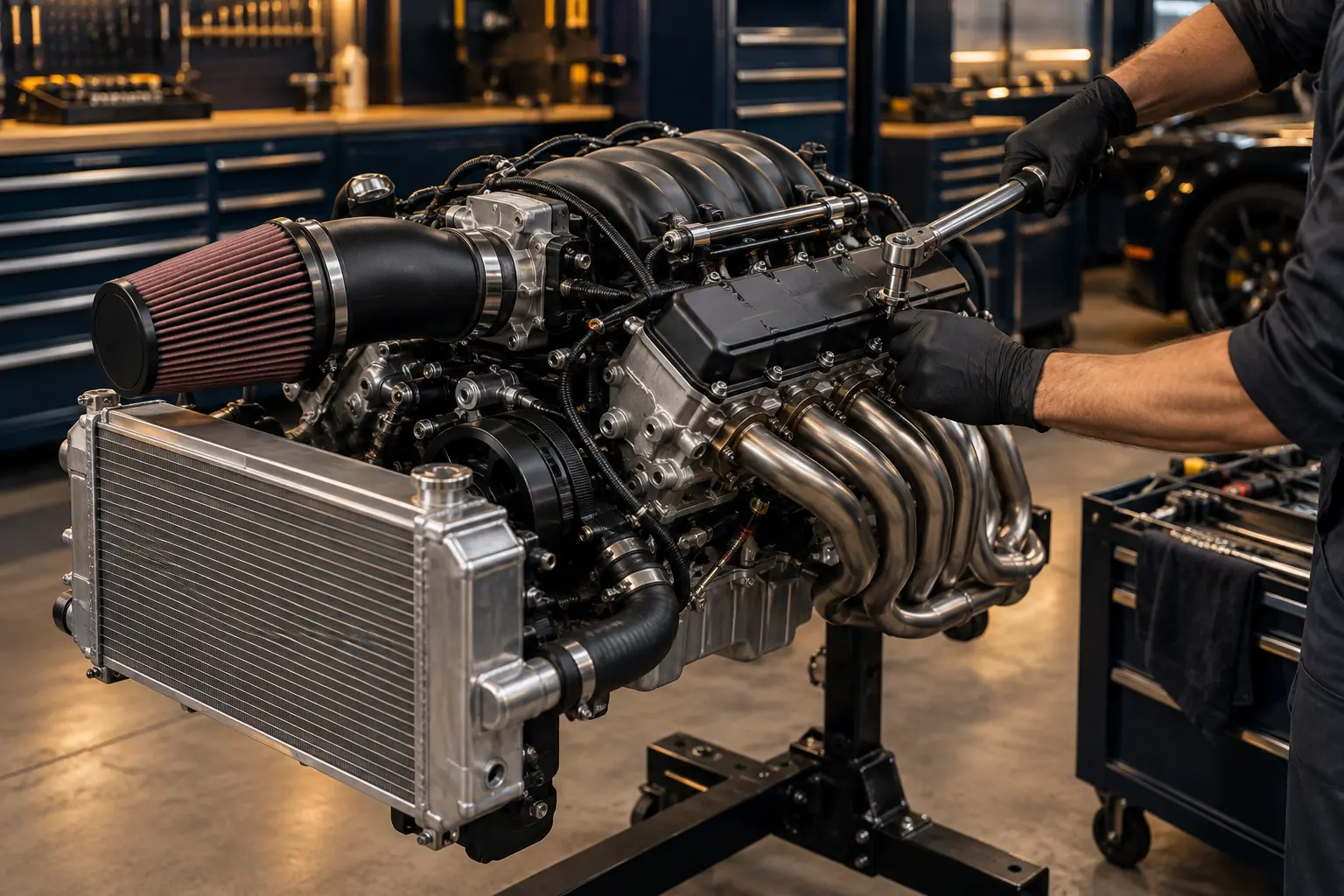
- Better cooling — A healthy radiator, correct thermostat and fresh coolant help the engine maintain performance safely during towing or demanding use.
- Reliable ignition parts — Fresh spark plugs and properly functioning coils can restore lost performance and keep the engine running consistently.
- Supporting transmission upgrades — Proper servicing, cooling and calibration help the transmission handle additional engine torque.
Specifications and procedures vary by vehicle. Follow the manufacturer’s service information and use a qualified professional for work beyond your training or equipment.