
How Things Work
Choose a vehicle, then explore its systems and parts.
Choose your vehicle
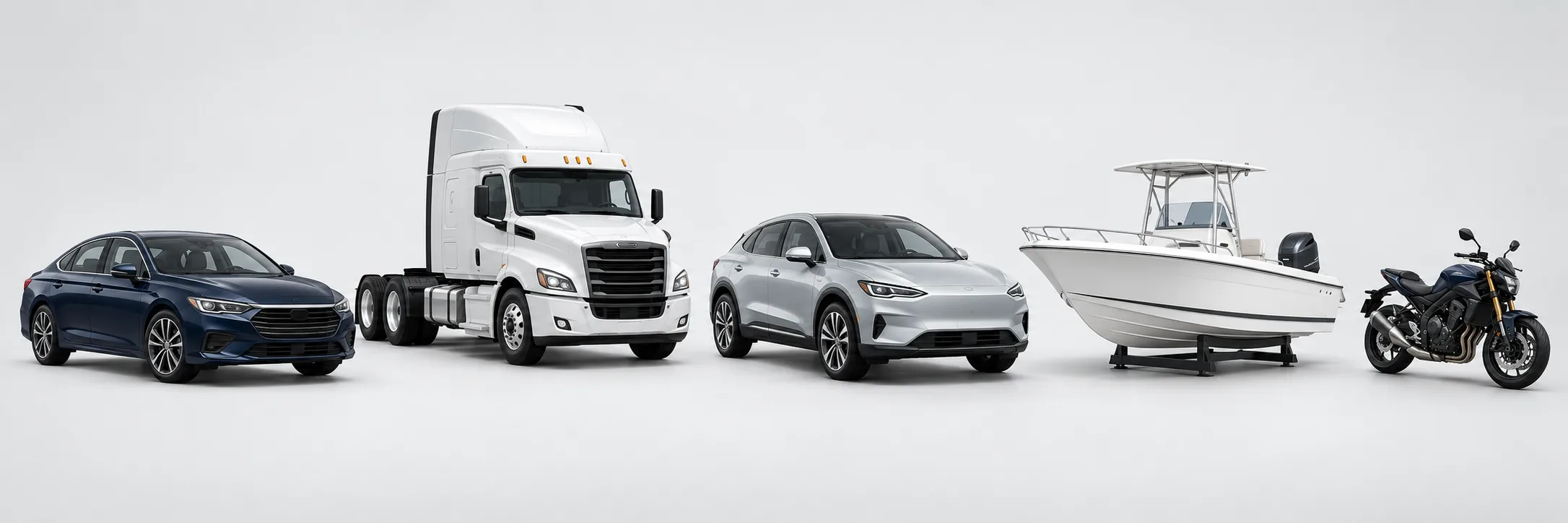
Tap a vehicle to explore its systems.
Car
Four-cylinder turbo engine
Tap a numbered label or a part name to learn what it does.
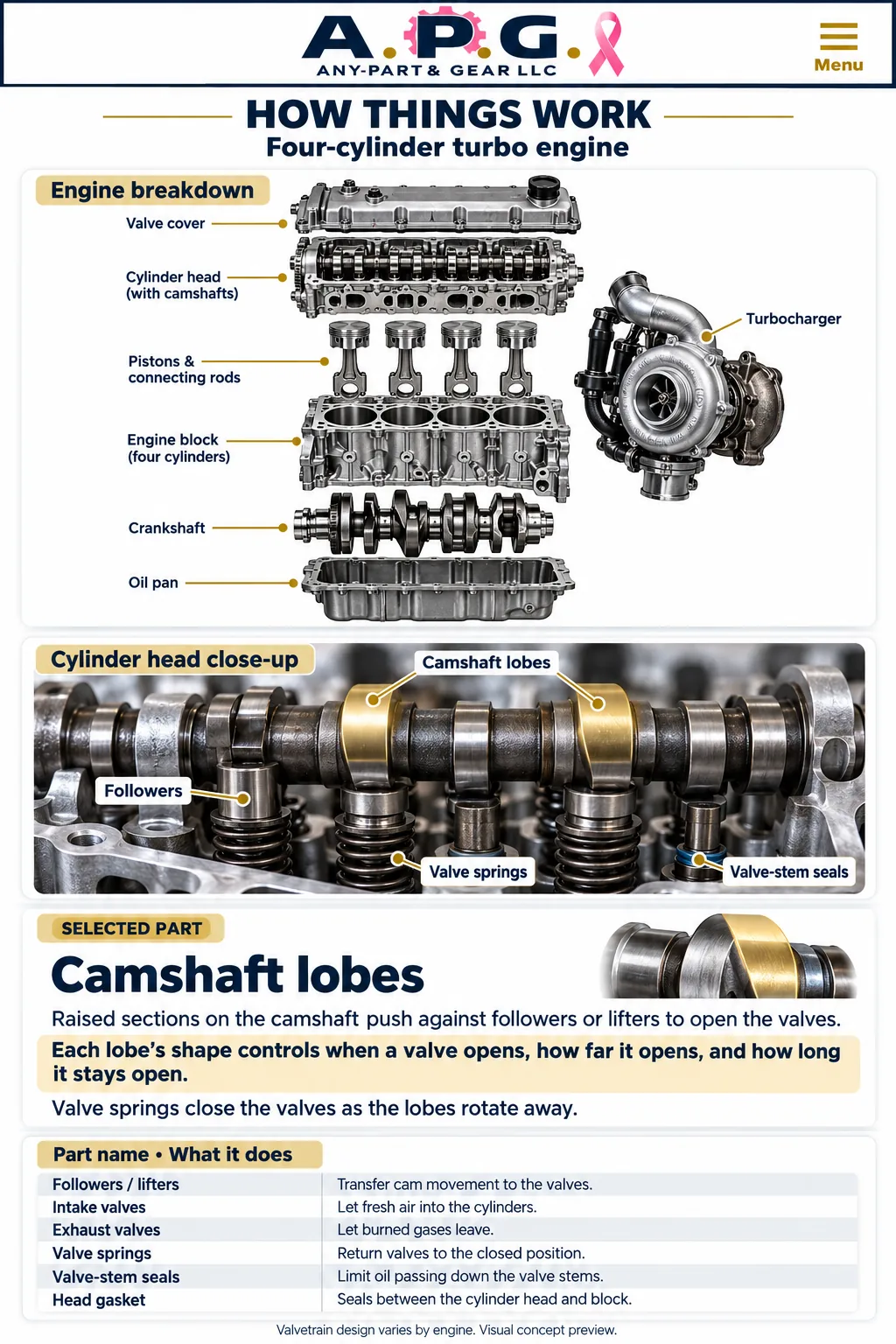
Cylinder head close-up
Camshaft lobes
Part name · What it does
| Part | Purpose |
|---|
Illustrations show typical assemblies rather than a specific manufacturer’s engine. Valvetrain and fuel-system designs vary.
Automatic transmission breakdown
Explore a conventional torque-converter automatic transmission. Tap a number or part name to see what it does.
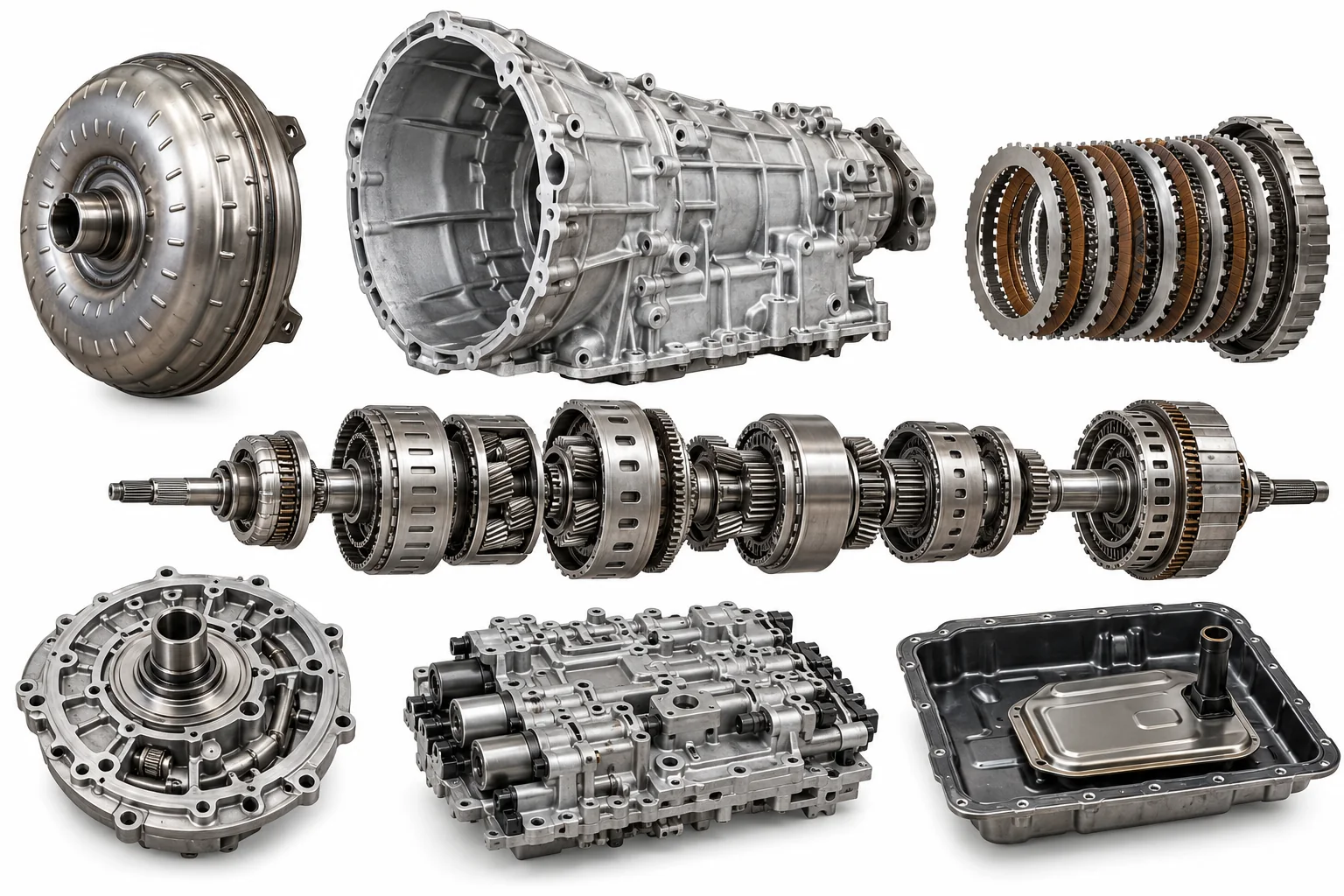
Main assemblies · 1–7
Additional components · 8–14
Tap a close-up to see that part’s name, purpose and location within the transmission.
Image labels 1–7 identify the main assemblies. The close-ups show parts 8–14; their locations are explained in the selected-part panel. Manual, dual-clutch and CVT layouts differ.
How an automatic changes gears
- The engine drives the torque converter, which transfers torque toward the gear train.
- The controller determines the appropriate operating ratio from vehicle conditions.
- The hydraulic system applies and releases the required friction elements.
- The planetary gear sets provide the resulting ratio and deliver torque toward the driveline.
Lock-up operation can reduce converter slip once conditions allow.
Reference resources: AISIN transmission overview · ZF torque converters
Alternator breakdown
See how a belt-driven alternator converts engine rotation into electricity.
Tap a numbered picture to see the part’s name and what it does.
Illustrative components and typical functions. Designs and component locations vary.
How it works
- The engine’s drive belt turns the pulley and rotor.
- The rotor’s magnetic field moves past the stationary stator windings, generating AC electricity.
- Rectifier diodes convert that AC output into DC.
- The regulator manages rotor field current to help control output for the vehicle’s electrical system.
Reference: DENSO alternators
Engine control module (ECM)
Explore the electronics that turn sensor information into engine-control commands.
Tap a numbered picture to see the part’s name and what it does.
Illustrative components and typical functions. Designs and component locations vary.
How it works
- Sensors send information about engine position, air, temperature and other operating conditions.
- Input circuits condition those signals so the controller can process them.
- The processor uses its software and calibration data to calculate commands.
- Output drivers control suitable actuators, while communication circuits exchange information with other modules.
Reference: Bosch engine control units
Hydraulic disc brakes
Explore the parts that turn pedal pressure into braking force in a typical passenger car.
Tap a numbered picture to see the part’s name and what it does.
Typical hydraulic disc-brake components. Drum brakes, truck air brakes and brake-by-wire systems use different arrangements.
How braking works
- Pressing the pedal applies force to the master cylinder, assisted by the booster in this example.
- The master cylinder creates pressure in the brake fluid. Pipes and hoses carry that pressure to the wheel brakes.
- Caliper pistons press the pads against the rotating discs. Friction converts the vehicle’s motion into heat.
- Wheel-speed sensors let ABS detect an approaching wheel lock. The hydraulic unit can reduce and reapply pressure at the affected wheel.
Reference resources: Bosch ABS · Bosch brake boosters · Brembo disc brakes
Inline-six diesel engine
Six cylinders in one row: six bores, six liners and six pistons.
Tap a numbered picture to see its name and what it does.
Inline-six example with six cylinder bores, six liners and six pistons. Illustrations show typical groups rather than a manufacturer-specific assembly.
Reference resource: Cummins diesel systems
Truck manual & automated manual transmission
Manual: the driver operates the clutch and gear selection. Automated manual: actuators operate the clutch and shifts. Pictures 5 and 6 show the automated controls.
Tap a numbered picture to see its name and what it does.
Illustrative heavy-duty automated manual components. This example uses a dry clutch rather than the car guide’s torque converter.
Reference resource: Eaton automated manual transmissions
Heavy-duty truck automatic transmission
A torque-converter automatic with planetary gears and internal clutch packs. Tap picture 4 to explore the friction and steel plates.
Tap a numbered picture to see its name and what it does.
Illustrative heavy-duty automatic component groups. Truck specifications and internal designs vary.
Reference resource: Allison heavy-duty automatic transmissions
Diesel turbo & charge-air system
Exhaust energy helps increase the air entering the engine.
Tap a numbered picture to see its name and what it does.
Typical component groups. Illustrations are learning references rather than manufacturer-specific service diagrams.
Reference resource: Cummins diesel systems
Common-rail diesel injection
An example of modern electronically controlled diesel fueling.
Tap a numbered picture to see its name and what it does.
Typical component groups. Illustrations are learning references rather than manufacturer-specific service diagrams.
Reference resource: Cummins diesel systems
Diesel emissions systems
Typical examples of modern diesel emissions hardware.
Tap a numbered picture to see its name and what it does.
Typical component groups. Illustrations are learning references rather than manufacturer-specific service diagrams.
Reference resource: Cummins diesel systems
EV traction battery
The energy-storage system for a battery-electric vehicle.
Tap a numbered picture to see its name and what it does.
Typical component groups. Illustrations are learning references rather than manufacturer-specific service diagrams.
Reference resource: U.S. Department of Energy EV components
Electric motor & reduction drive
Electrical energy becomes driving torque.
Tap a numbered picture to see its name and what it does.
Typical component groups. Illustrations are learning references rather than manufacturer-specific service diagrams.
Reference resource: U.S. Department of Energy EV components
EV inverter
Power electronics connect the battery to the motor.
Tap a numbered picture to see its name and what it does.
Typical component groups. Illustrations are learning references rather than manufacturer-specific service diagrams.
Reference resource: U.S. Department of Energy EV components
EV charging
Different hardware is used for AC and DC charging.
Tap a numbered picture to see its name and what it does.
Typical component groups. Illustrations are learning references rather than manufacturer-specific service diagrams.
Reference resource: U.S. Department of Energy EV components
Low-voltage power in an EV
The traction battery also supports the auxiliary electrical system.
Tap a numbered picture to see its name and what it does.
Typical component groups. Illustrations are learning references rather than manufacturer-specific service diagrams.
Reference resource: U.S. Department of Energy EV components
Outboard engine powerhead
A representative gasoline outboard engine.
Tap a numbered picture to see its name and what it does.
Typical component groups. Illustrations are learning references rather than manufacturer-specific service diagrams.
Reference resource: Yamaha outboard systems
Outboard propulsion
Follow torque from the engine toward the propeller.
Tap a numbered picture to see its name and what it does.
Typical component groups. Illustrations are learning references rather than manufacturer-specific service diagrams.
Reference resource: Yamaha outboard systems
Outboard cooling
A typical raw-water cooling example.
Tap a numbered picture to see its name and what it does.
Typical component groups. Illustrations are learning references rather than manufacturer-specific service diagrams.
Reference resource: Yamaha outboard systems
Boat electrical system
Representative low-voltage starting and onboard power components.
Tap a numbered picture to see its name and what it does.
Typical component groups. Illustrations are learning references rather than manufacturer-specific service diagrams.
Reference resource: Yamaha outboard systems
Marine engine controls
Mechanical and electronic examples.
Tap a numbered picture to see its name and what it does.
Typical component groups. Illustrations are learning references rather than manufacturer-specific service diagrams.
Reference resource: Yamaha outboard systems
Motorcycle engine
A representative four-stroke combustion engine.
Tap a numbered picture to see its name and what it does.
Typical component groups. Illustrations are learning references rather than manufacturer-specific service diagrams.
Reference resource: Bosch motorcycle engine management
Motorcycle wet multi-plate clutch
A common example of motorcycle clutch design.
Tap a numbered picture to see its name and what it does.
Typical component groups. Illustrations are learning references rather than manufacturer-specific service diagrams.
Reference resource: Bosch motorcycle engine management
Motorcycle sequential gearbox
A typical constant-mesh motorcycle gearbox.
Tap a numbered picture to see its name and what it does.
Typical component groups. Illustrations are learning references rather than manufacturer-specific service diagrams.
Reference resource: Bosch motorcycle engine management
Motorcycle final drive
Three alternative designs, rather than parts used together.
Tap a numbered picture to see its name and what it does.
Typical component groups. Illustrations are learning references rather than manufacturer-specific service diagrams.
Reference resource: Bosch motorcycle engine management
Motorcycle charging system
A typical permanent-magnet alternator arrangement.
Tap a numbered picture to see its name and what it does.
Typical component groups. Illustrations are learning references rather than manufacturer-specific service diagrams.
Reference resource: Bosch motorcycle engine management
Regenerative braking
Recovering some vehicle motion energy as electricity.
Tap a numbered picture to see its name and what it does.
Typical component groups. Illustrations are learning references rather than manufacturer-specific service diagrams.
Reference resource: Bosch regenerative braking
Learn more with books
Optional reading to go deeper into the systems you’re exploring.
Affiliate disclosure: As an Amazon Associate I earn from qualifying purchases. How affiliate links work
Links open Amazon search results. Kindle editions are available for some titles; purchases and downloads are handled by Amazon. Check the title, format, edition and equipment covered before purchasing. Amazon sets prices and availability.